 Image 1 of 3
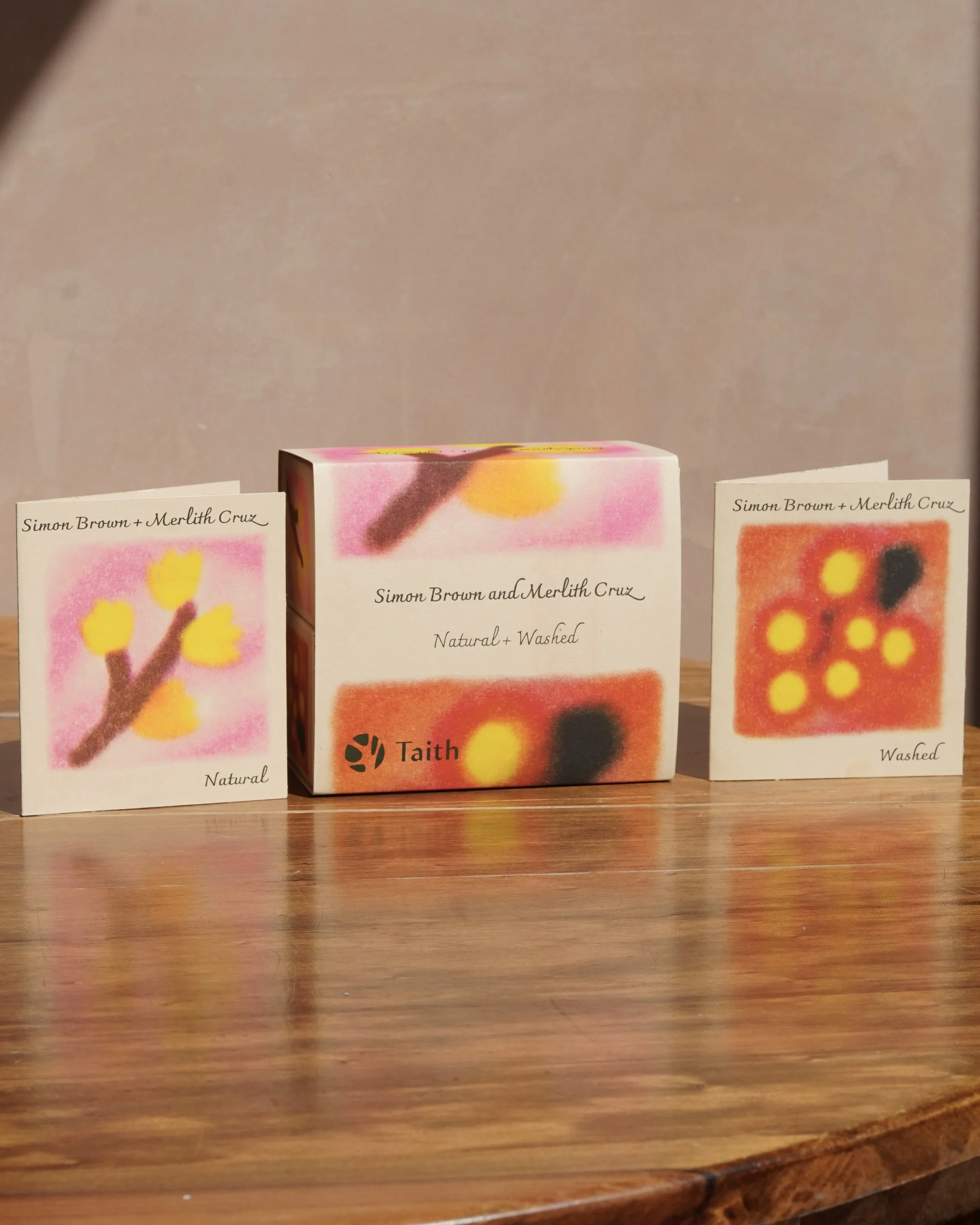 Image 2 of 3
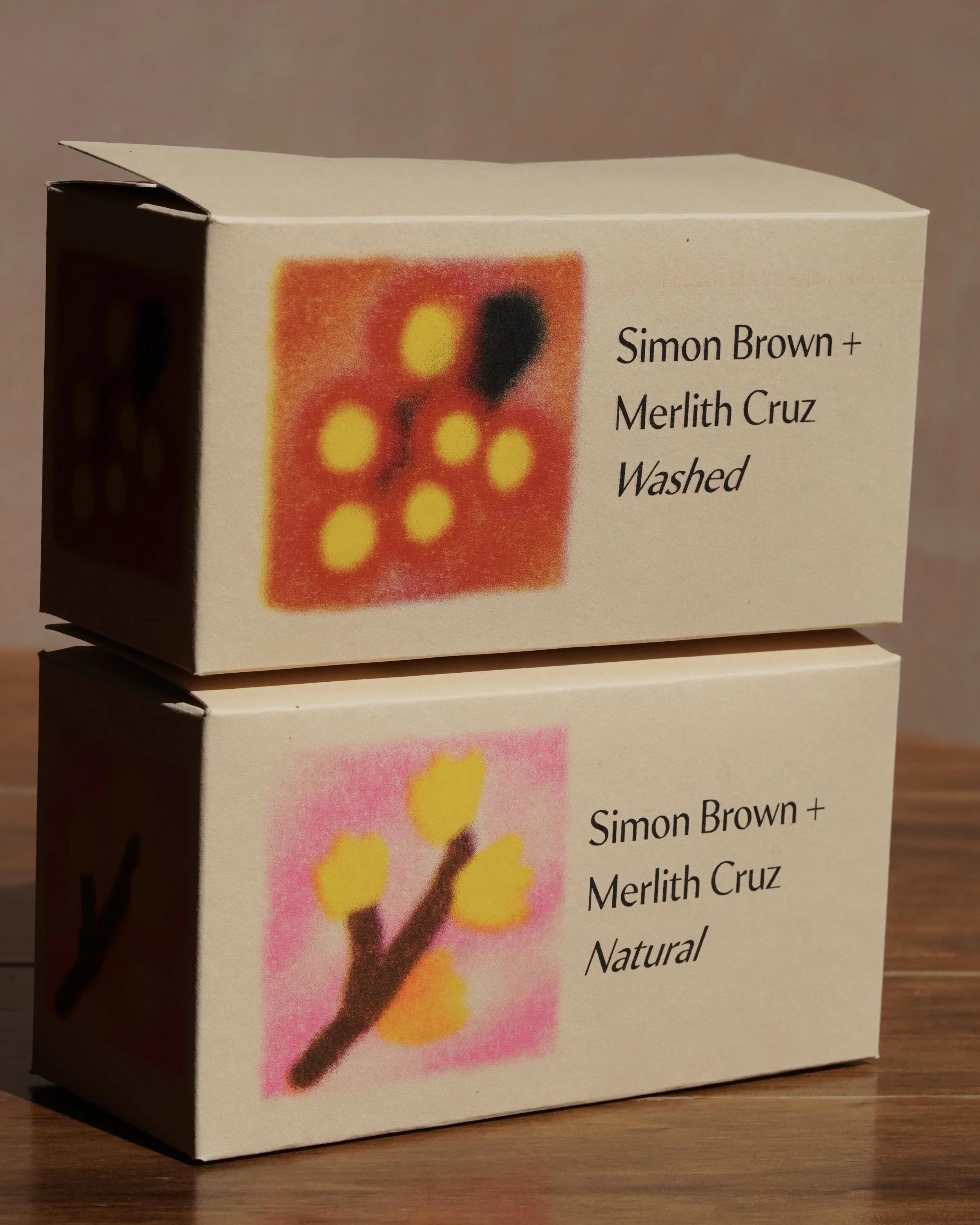 Image 3 of 3
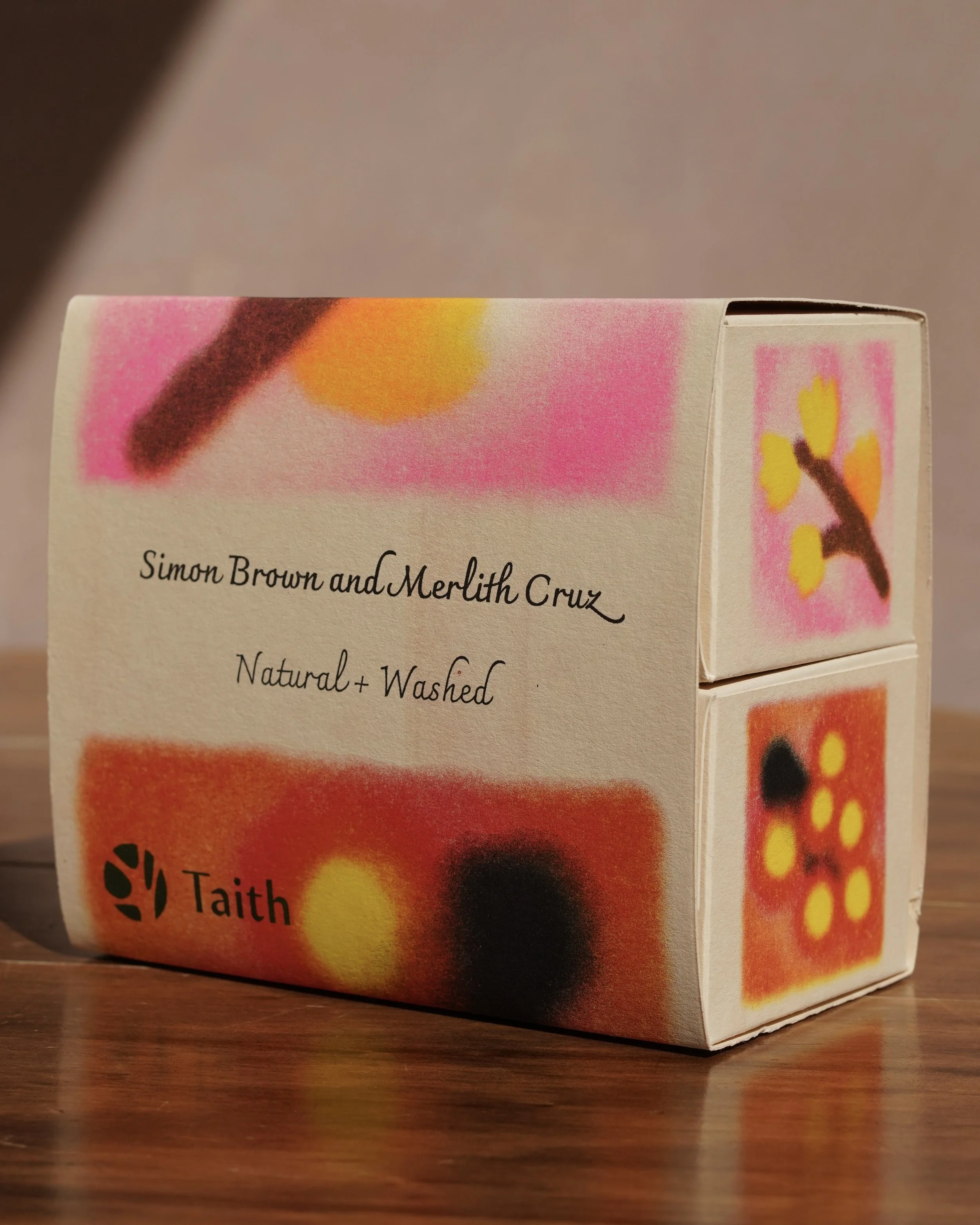
Producer - Simon Brown and Merlith Cruz
Origin - Peru
Process - Inoculated Washed, Inoculated Natural
Varietal - Geisha
Altitude - 1950 - 2000 MASL
Flavour Notes - Inoculated Washed : Earl Grey, Lemon Curd, Wethers Original, Inoculated Natural : Apricot, Floral, Lychee Liqueur
Best for: Filter + Modern Espresso
roast level: Extremely Light
This Pack contains 100g of Inoculated Washed and 100g of inoculated natural.
Merlith and her husband Simon acquired the farm in 2019, beginning their journey into coffee cultivation shortly thereafter. In early 2020, they planted their first trees, focusing on a carefully selected range of Ethiopian varieties across a two-hectare sub-plot. Within this area, they established five distinct lines, some consisting of compact-growing plants while others are taller and bear a closer resemblance to Bourbon types. The farm also features a dedicated Geisha section composed of two separate lines. One originates from Ethiopian Geisha stock, while the other was developed using seeds sourced from Panama. At present, most of the Geisha coffee in production comes from the Panama-derived line, which has shown particularly strong performance under the farm’s conditions. From the outset, Merlith and Simon have prioritized sustainable farming practices and the preservation of biodiversity. Their approach minimizes the use of chemical fertilizers, relying instead on careful soil management. Weed control is carried out entirely by hand, reflecting their commitment to environmentally responsible cultivation methods. Nearly all coffee produced at Las Etiopes is processed using the fully washed method. Since the farm’s establishment, Merlith and her team have continuously refined their processing techniques, adapting them to suit the specific characteristics of each variety grown. For Geisha lots like this one, only the ripest cherries are selected through careful hand harvesting, followed by meticulous hand sorting. After collection, the cherries are rinsed and then floated in fresh, cold spring water. This step helps eliminate lower-quality beans while also cleaning the fruit and reducing microbial presence, ensuring a higher standard of quality in the final product.
PROCESS
WASHED
Until 2025, nearly all coffee produced at Las Etiopes was processed using conventional fermentation methods, primarily dry fermentation in tiled tanks. This remains the farm’s main approach; however, in 2025, a portion of production began using stainless steel tanks with added natural inoculants. To support these innovations, a dedicated processing lab was constructed, housing stainless steel tanks, food-grade bioreactor barrels, and laboratory equipment for isolating and monitoring yeast and bacteria prior to inoculation.
For this lot, a natural mosto was developed by fermenting a batch of geisha coffee in sealed tanks with a solution of simple syrup and hops. The hops provide antimicrobial properties that favor yeast activity over bacterial growth. The pulped coffee ferments for five to seven days, with regular pH and Brix measurements to track microbial activity. Once optimal yeast vigor is reached, the liquid is strained and preserved as mosto, which is maintained similarly to a sourdough starter.
Freshly harvested cherries are rinsed, depulped, and fermented for 72 hours with the mosto. Afterward, the coffee is washed and slowly dried on raised beds.
NATURAL
This lot was processed using a yeast-rich mosto designed specifically for washed coffee fermentation. The yeasts were originally isolated from the mucilage of heirloom varieties grown on the farm, then carefully propagated. To create the mosto, selected cherries from specific landrace varieties were harvested, pulped, and placed in a vessel with a solution of sugar syrup and hops. The addition of hops serves as a natural antimicrobial agent, helping suppress unwanted bacterial growth while encouraging the development of desirable yeasts.
The mixture is left to ferment for five to seven days, during which pH and Brix levels are closely monitored to track microbial activity and fermentation progress. Once the yeast population becomes sufficiently active and stable, the liquid is separated from the solids. This resulting liquid the mosto is then used to inoculate larger production batches and can be maintained over time with regular feedings of sugar syrup, similar to a sourdough starter.
Freshly harvested coffee cherries are rinsed and floated in cold spring water to remove defects and reduce microbial load. They are then fermented in stainless steel tanks with the mosto for 24 hours before being dried slowly on raised beds.
Producer - Simon Brown and Merlith Cruz
Origin - Peru
Process - Inoculated Washed, Inoculated Natural
Varietal - Geisha
Altitude - 1950 - 2000 MASL
Flavour Notes - Inoculated Washed : Earl Grey, Lemon Curd, Wethers Original, Inoculated Natural : Apricot, Floral, Lychee Liqueur
Best for: Filter + Modern Espresso
roast level: Extremely Light
This Pack contains 100g of Inoculated Washed and 100g of inoculated natural.
Merlith and her husband Simon acquired the farm in 2019, beginning their journey into coffee cultivation shortly thereafter. In early 2020, they planted their first trees, focusing on a carefully selected range of Ethiopian varieties across a two-hectare sub-plot. Within this area, they established five distinct lines, some consisting of compact-growing plants while others are taller and bear a closer resemblance to Bourbon types. The farm also features a dedicated Geisha section composed of two separate lines. One originates from Ethiopian Geisha stock, while the other was developed using seeds sourced from Panama. At present, most of the Geisha coffee in production comes from the Panama-derived line, which has shown particularly strong performance under the farm’s conditions. From the outset, Merlith and Simon have prioritized sustainable farming practices and the preservation of biodiversity. Their approach minimizes the use of chemical fertilizers, relying instead on careful soil management. Weed control is carried out entirely by hand, reflecting their commitment to environmentally responsible cultivation methods. Nearly all coffee produced at Las Etiopes is processed using the fully washed method. Since the farm’s establishment, Merlith and her team have continuously refined their processing techniques, adapting them to suit the specific characteristics of each variety grown. For Geisha lots like this one, only the ripest cherries are selected through careful hand harvesting, followed by meticulous hand sorting. After collection, the cherries are rinsed and then floated in fresh, cold spring water. This step helps eliminate lower-quality beans while also cleaning the fruit and reducing microbial presence, ensuring a higher standard of quality in the final product.
PROCESS
WASHED
Until 2025, nearly all coffee produced at Las Etiopes was processed using conventional fermentation methods, primarily dry fermentation in tiled tanks. This remains the farm’s main approach; however, in 2025, a portion of production began using stainless steel tanks with added natural inoculants. To support these innovations, a dedicated processing lab was constructed, housing stainless steel tanks, food-grade bioreactor barrels, and laboratory equipment for isolating and monitoring yeast and bacteria prior to inoculation.
For this lot, a natural mosto was developed by fermenting a batch of geisha coffee in sealed tanks with a solution of simple syrup and hops. The hops provide antimicrobial properties that favor yeast activity over bacterial growth. The pulped coffee ferments for five to seven days, with regular pH and Brix measurements to track microbial activity. Once optimal yeast vigor is reached, the liquid is strained and preserved as mosto, which is maintained similarly to a sourdough starter.
Freshly harvested cherries are rinsed, depulped, and fermented for 72 hours with the mosto. Afterward, the coffee is washed and slowly dried on raised beds.
NATURAL
This lot was processed using a yeast-rich mosto designed specifically for washed coffee fermentation. The yeasts were originally isolated from the mucilage of heirloom varieties grown on the farm, then carefully propagated. To create the mosto, selected cherries from specific landrace varieties were harvested, pulped, and placed in a vessel with a solution of sugar syrup and hops. The addition of hops serves as a natural antimicrobial agent, helping suppress unwanted bacterial growth while encouraging the development of desirable yeasts.
The mixture is left to ferment for five to seven days, during which pH and Brix levels are closely monitored to track microbial activity and fermentation progress. Once the yeast population becomes sufficiently active and stable, the liquid is separated from the solids. This resulting liquid the mosto is then used to inoculate larger production batches and can be maintained over time with regular feedings of sugar syrup, similar to a sourdough starter.
Freshly harvested coffee cherries are rinsed and floated in cold spring water to remove defects and reduce microbial load. They are then fermented in stainless steel tanks with the mosto for 24 hours before being dried slowly on raised beds.